Showing posts with label egg main dish. Show all posts

Wednesday, May 27, 2015

Spanish Tortilla


Not long ago, I saw a reference to a "Spanish tortilla," something very different from the tortillas we associate with Mexican dishes. While in Barcelona Spain recently,  I had an opportunity to try some "authentic" tapas, including the "Spanish tortillas" I had heard about.

As with almost all the tapas we tried, these were delicious, so I came home ready to do more research into making my own. Following is what I found to be a real favorite for our family, something that would make a great brunch dish or even a light supper. Because of the typical Spanish custom of serving this at room temperature, it could even be a good potluck dish--though I would not want to leave it at room temperature for an hour or so.

This version is larger than the tortillas served as tapas. Those were more individually sized, and some had a layer of sliced tomatoes under this potato egg dish. This one would be best served as narrow wedges, something like you might serve a quiche. There is just a small challenge in getting the finished dish out of the pan in one piece, but using enough oil in a well-seasoned cast iron skillet made the job pretty easy.

This is good just as is, but either a little salsa or pesto (like this one:  http://frugalfastfun.blogspot.com/2015/05/cilantro-and-spinach-pesto.html) can also be a good accompaniment.

Spanish Tortilla

11 oz potatoes, thinly sliced (2 medium), app 2 c when sliced
4 oz chopped onion (1 c)
2 cloves garlic, chopped
½ t salt (will probably want more)
black pepper to taste
¾ c olive oil
3 eggs

Method:  
1.  Add all the oil to a skillet and begin to warm over medium heat. Add potatoes, onions, and garlic and season with salt and pepper. The oil should almost cover the potatoes. Cook slowly until the potatoes are just tender, probably about 12 to 15 minutes, stirring gently a few times. Remove from heat and put in a colander to drain until just warm. (Save oil for re-use.) 
2.  Meanwhile, beat the eggs in a large bowl until the mixture is uniform in color. Stir the just warm potatoes into the eggs. Heat the oven to 375 degrees in preparation for the final step.
3.  Add just enough of the reserved oil to be sure skillet is just covered with a sheen of oil. (You don't want a lot, but you also want to be able to turn the tortilla out of the pan in one piece!) Heat the pan to medium high.
4.  Pour the potato mixture into the pan and spread out evenly. Cook for about 5 minutes, using a spatula around the edges to occasionally loosen the eggs from the pan. 

5.  When the edges begin to look set and cooked but the center is still liquid, place the skillet in the pre-heated oven and allow to cook another 8 to 10 minutes, until the center is fully set.


6.  Remove from oven and turn onto a plate, using a spatula as needed to gently loosen the tortilla from the pan in one piece. May be served hot or, apparently typical in Spain, at room temperature. 


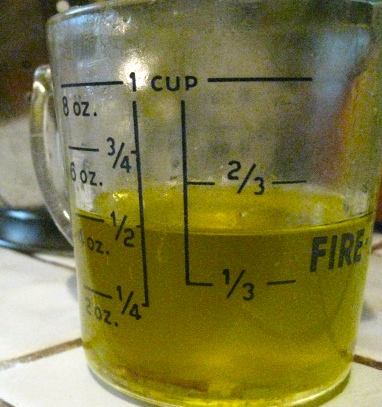
Note that the reserved oil amounted to a full half cup, so the total used in this recipe was "only" a quarter cup. The oil that remained was nicely flavored with the onion and garlic, so it will be useful for sauteeing vegetables, etc.


Update on June 22, 2015:

I can't resist adding this link with more info on Spanish tortillas:

http://www.nytimes.com/2015/06/21/magazine/the-king-of-tapas.html?rref=collection%2Fsectioncollection%2Fmagazine


Monday, May 5, 2014

Sweet and Savory Stratas


Egg main dishes are wonderfully versatile, serving well as a contribution to a breakfast or brunch potluck and taking on center stage for a quick weeknight dinner. This weekend I had the opportunity to make two stratas that demonstrate the wide range of dishes possible with eggs at the base. Our brunch would have fresh fruit and breakfast meats brought by others; rather than also serving the traditional bread choices--bagels, muffins, etc.--the main dish incorporated both protein and grain servings. To meet the tastes of all, I made both a sweet and a savory strata, demonstrating how the basic method can take on very different characteristics depending on the add-ons.

This weekend, I had an opportunity to provide the main dish for a brunch potluck. With others bringing fresh fruit and breakfast meats, making strata seemed a great way to provide main dish and bread all in one. So what is a "strata?" Wikipedia, everyone's favorite source of expertise, provides this definition: "Strata or stratta is a family of layered casserole dishes in American cuisine. The most common modern variant is a brunch dish, similar to a quiche or frittata, made from a mixture which mainly consists of bread, eggs and cheese." 

There are a few things to keep in mind when making strata:
  • Firm, hearty breads generally are best, since plain white sandwich loaves tend to dissolve into mush too quickly, making the overall texture of the final dish disappointing. 
  • Drying or toasting the bread first can help make sure the bread absorbs all the flavor of the custard ingredients. This is a great way to use up those ends of bread your family doesn't eat, the odd hard roll left over from a barbecue, etc. Just cube the bread, dry thoroughly and store (freezer is best, though thoroughly dried bread can be stored on the shelf for a week or two).
  • You can vary the amounts of custard (the egg mixture) and bread so that your final dish is much like a bread pudding all the way to a mostly egg frittata-like dish. The amounts in today's recipes lean toward the bread pudding side, so feel free to reduce the amount of bread or add another egg and some more milk if you want a softer final dish.

Now, to the recipes.


Maple, Apple, and Pecan Strata

8 eggs
approximately 8 to 10 oz dense bread, diced
1/3 c maple syrup, real or imitation acceptable 
1 t vanilla
2 t cinnamon
2 c milk; more may be needed

Topping
3 T butter
1/3 c sugar
1 1/2 c cored but not peeled apple, chopped (2 medium)
1 1/2 c pecan halves
1/2 t maple flavoring

1.  Spread the bread in a well-buttered 10 inch round casserole dish.
2.  Combine the eggs, syrup, vanilla, and cinnamon. Beat well.
3.  Gradually add the milk to the eggs and then pour over the bread. If there is not enough of the egg mixture to cover the bread, you may need to add a little more milk. (If you need to add more than another cup of milk, you may want to stir in an additional egg to the added milk.)
4.  Prepare the Topping:  Melt the butter and sugar over medium high heat and stir in the apples. Cook until the apples are translucent and the mixture has a nicely caramelized texture and color. Remove from heat and stir in the maple flavoring and pecans.
5.  Spread the Topping evenly over the egg and bread mixture. Cover tightly and refrigerate at least 4 to 5 hours or overnight.
6.  Remove the strata from the refrigerator. Preheat oven to 325. Uncover the strata and bake for 30 to 40 minutes, until a knife inserted near the center comes out clean. Allow to sit for 5 to 10 minutes before serving.

Serves 5 to 6. Serving suggestion: provide maple syrup and/or vanilla yogurt for toppings. 

Frugal hints:
  • The pecans can be cut back--to even 1/2 cup-- chopping the nuts coarsely to spread the pieces and flavor more evenly. Walnuts can also be substituted if they are less expensive.
  • While substitute "maple syrups" are never as good as the real thing, this recipe can easily use the imitation varieties, with less impact on overall flavor than you might expect.
  • Plan to make this, and other egg-based main dishes, when eggs are on sale. Many stores use eggs as "loss leaders," so stock up when you see an attractive price. Don't worry--eggs will keep in the refrigerator for weeks, well past the "best by" date stamped on the carton. Even the USDA says so!


Spinach and Mushroom Strata

9 eggs
approximately 12 oz bread cubes
approximately 4 c milk
1 T olive or canola oil
1 large onion, coarsely chopped
4 oz mushrooms, sliced or coarsely chopped
2 to 3 c fresh baby spinach leaves
1 T prepared yellow mustard
3/4 t dried basil
1/2 t garlic powder or to taste
1/2 t seasoning salt
black pepper to taste
2 c grated cheddar, Monterrey Jack or similar cheese

1.  Saute the onions and mushrooms in the oil. When the onions are just starting to turn golden and the mushrooms are softened, stir in the spinach and cook for about 1 more minute, just enough to wilt the spinach slightly. Remove from heat.
2.  Toss the bread with the vegetable mixture and spread in a well-buttered 10 to 12 inch casserole dish.
3.  Combine the eggs, mustard, basil, garlic powder and seasoning salt and beat well. 
4.  Stir in about three cups of the milk and 1 cup of the grated cheese. 
5.  Pour the eggs over the bread mixture. If the bread is not well covered, pour another cup or so of milk, until the bread is just covered. Spread the rest of the cheese over the top. 
6.  Cover tightly and refrigerate 4 to 5 hours or overnight. 
7.  When ready to bake, remove the strata from the refrigerator and then begin to preheat oven to 325 degrees. Bake, uncovered, 30 to 40 minutes, until a knife inserted near the center comes out clean. Allow to sit for 5 to 10 minutes before serving. 

NOTE: If the strata begins to brown too much before the center is set, cover lightly with foil while finishing baking.

Serves 5 to 6. Provide salsa and/or hot sauce if desired. 

Variations:

Many vegetables can be added in addition or in place of the spinach. Fresh broccoli or cauliflower, broken into small, bite-sized pieces, can be sauteed with the onions. Chopped bell pepper can be sauteed with the onions too. 

This is a good way to not just use up leftover bread. If you have leftover vegetables (corn, peas, mixed vegetables, etc.), stir these into the bread with the onion mixture. 


Friday, July 6, 2012

Start the Day with Veggies!


Have you looked at a calorie chart for the typical coffee shop muffin or bagel and toppings?

It doesn't take long for just one of these to top 500, even 600 calories.  Add the calories in that mocha or whatever other special drink you ordered with it, and your "light" breakfast has eaten up a huge part of the day's calories, without much real nutritional benefit.

(And if you really want to go "whole hog," eat a classic Cinnabon roll, just one, and you've consumed 730 calories.)

If you'd like to make a weekend breakfast (or brunch) that will give you a much healthier start, no more calories, lower cost, and not a lot of prep time, here's a suggested alternative...veggies for breakfast!

Okay, I know that vegetables may still be the "good" food group hardest to get enough of. Now that there are lots of bright vegetables at the farmers' market and in the grocery store, it's time to try some new flavors and combinations.

Today's recipe (with toppings shown in the photo) will add up to well less than 400 calories, high in protein, and even gluten-free if that is important to you. With carrots and onions mixed in with the colorful chard, this might be something even the most resistant greens eaters will try. You can reduce calories further if you use yogurt as a topping instead of the tablespoon of 2% cheese shown here--or just skip entirely.


Morning Vegetables with Eggs

canola or olive oil
4 c rainbow chard (about 4 to 6 oz)
1/3 c chopped onion
3/4 c sliced carrots (1 medium)
1 seeded jalapeno, chopped (optional)
1 to 2 cloves garlic (optional)
1/4 to 1/2 t Italian seasoning OR dried basil

3 eggs

Optional toppings:
salsa
shredded 2% cheddar or mozzarella cheese
plain, fat free yogurt
roasted, salted sunflower seeds

1.  Separate the chard stems from the leaves. Coarsely cut the leaves and set aside. Chop the stems in 1/2-1 inch lengths.
2.  Put just enough oil in a non-stick pan to lightly coat it. Stir in the onions, carrots, and chopped chard stems. Saute over medium heat until the onions are translucent and the carrots are barely tender.
3.  Stir in the jalapeno, chard leaves and seasonings. Reduce heat to low, cover and cook just until the chard is limp and tender.
4.  Meanwhile, stir the eggs together with a fork just enough to blend the yolks and whites into a uniform color. Heat to medium to medium high a small amount of oil in a small skillet and stir the eggs into the pan.
5.  Stir the eggs occasionally as they cook, breaking them up as needed to obtain the scrambled egg texture you prefer.
6. Serve the eggs and vegetables with any of the optional toppings--or anything else you like to add! Fresh herbs, hot sauce, even soy sauce might be choices your family prefers.

Serves two but easily doubled or more.


Thursday, November 17, 2011

Brunch, Lunch, Supper--A Flexible and Fast Main Dish


Potatoes O'Brien is a dish found on many coffee shop menus, while Lyonnaise Potatoes may appear on the breakfast listings at a little more upscale hotel restaurant. Whatever the name, these usually have a similar base, sliced (occasionally diced) potatoes sauteed with some onion and, in the case of the O'Brien version, bell peppers. Most often, these will be offered as a side dish, with eggs cooked to your preference along with toast, English muffin, or bagel. Often, bacon, sausage, or ham are also loaded onto the already crowded plate. These potatoes may also be a side dish for a three (!) egg omelet loaded with all kinds of other goodies, like the afore-mentioned breakfast meats, lots of wonderfully gooey cheese, etc.

Oy.

When cooked in a lot of fat, added to an already calorie and fat-heavy meal and then with the redundant carbs of one of those bread choices, this potato dish can seem anything but healthy.

However, the version I'm including today can actually be a good choice for a quick meal anytime of the day.  A few ways to move it into the category of a welcome choice:
  • Make this the only carb choice--no need for toast or other bread-y additions
  • Reduce the amount of fat used for the potatoes--not at all hard if you start with a nonstick or (best of all) well-seasoned cast iron skillet
  • Use eggs as your source of protein (Read the NOTE below the recipe to see more on this)
  • Potatoes are high on many glycemic indices, but keep the peeling on. Treat them as the carb part of the meal, not as one of your vegetable servings and you'll be okay. That's why this dish, loaded up with lots of veggies--squash or carrots and lots of onion and bell pepper--works well nutritiously
  • Add a glass of milk and some fresh fruit in season for a completely balanced meal
 The following recipe takes all of these steps into account, resulting in a warm and friendly meal that can be prepared quickly and inexpensively.

Potato Eggs O'Brien

These amounts are for one to two servings. Multiply as needed for the number of people you are feeding.

1 T canola or olive oil
1/2 medium onion, chopped (about 1/2 cup)
1 large potato, scrubbed (but not peeled) and sliced (about 2 cups)
1/4 to 1/3 c diced bell pepper--if possible, use green and red for maximum color appeal
1 c lightly cooked butternut squash, cubed OR
1 c sliced or diced carrot (about 1 medium)
2 eggs
seasoning salt and cayenne (or black) pepper, to taste

1.  Saute onion in oil over medium to high heat for about 5 minutes, while you are preparing the other vegetables.

2.  Add the potatoes (and carrots, if using these instead of squash) and continue cooking about 5 minutes, until the potatoes are golden on the bottom. Turn and sprinkle with a small amount of seasoning salt and pepper. Cover and continue cooking about 5 more minutes. Stir and add the bell pepper and squash, cover again and continue cooking until the potatoes are just tender.

3.  Reduce the heat to medium/low and push the vegetables to the sides of the pan, opening an area in the center. Continue cooking in one of the following ways:

For eggs "sunny side up":  Break the eggs into this cleared area, sprinkle with a few drops of water, and cover the pan. Continue cooking until the eggs are set.

For eggs scrambled into the rest of the mixture:  Lightly mix the eggs with a fork and pour into the center. As they begin to set, gently stir the eggs into the vegetables, coating all lightly. Cook until all parts of the egg are set.

May serve with salsa, ketchup, and/or plain yogurt as desired.


NOTE:
Eggs?  For many of us who remember the decades of warnings against eating any eggs at all, the moves toward bringing these back into the acceptable nutrition category may be hard to get used to. However, there are now well-grounded studies that show eggs can be valuable--and very inexpensive--additions to a well-balanced diet. No, three fried eggs every day for breakfast will never again be seen as good, but you can easily eat eggs a few times a week without any fear of problems. (NOTE: For a few people, eggs are still a problem; if your doctor has indicated they are not for you, do heed his or her advice!)

The key is, as with all foods, keeping the preparation as healthy as possible. If you choose to accompany your eggs with high fat "breakfast" meats or you always choose cooking methods that also include cheese (omelets, frittatas, etc.), the problem will not be with the eggs!

Bottom line:  If you are one of those people who find an egg with a side  "home fries" or "hash browns" one of life's guilty pleasures, enjoy this version, guilt-free.


Saturday, April 23, 2011

Eggs for Brunch, Potluck, a Family Supper

When eggs are on special (as they often are around Easter), buy a couple of extra dozen and put them in the refrigerator for use over the next several weeks. (If you are worried about keeping eggs so long, go to http://www.agr.state.il.us/programs/consumer/egg/eggconsguide.html for verification that eggs can be kept for an extended time if properly stored and cooked.)

The following recipe is easily halved, but the full amount makes a generous contribution to a potluck or feeds a houseful for brunch.

Vegetarian Strata

10 c cubed bread (see NOTE)
1 small onion, chopped
1/4 c diced red bell pepper--use fresh, frozen, or bottled
12 to 14 eggs
1/4 to 1/2 t cajun seasoning (OR freshly ground black pepper)
1 t mixed dried herbs (I used basil, rosemary, and thyme in equal parts)
2 t prepared yellow mustard
8 oz Colby, cheddar, or Monterrey jack cheese, divided
6 oz frozen chopped spinach

1. Oil an 11 X 13 baking dish. (If you choose to divide the recipe in half, use an 8 inch square or round container instead.)
2. Saute the onions in a small amount of canola oil until golden and translucent.
3. Beat the eggs with a fork or wisk until evenly mixed, as for scrambled eggs. Stir in the sauteed onions and all remaining ingredients except for about half the cheese.
3. Pour the egg mixture into the prepared pan. Top with the reserved cheese and cover tightly with foil.
4. Refrigerate for several hours or overnight.
5. Preheat oven to 350 degrees and bake strata, covered, for 25 minutes. Remove foil and bake for another 15 to 25 minutes, until a knife inserted in the center comes out clean. Serves 10 to 12.

NOTE:
For this recipe, which is really just a savory rather than sweet bread pudding, you can use all kinds of leftovers. Keep a container in your freezer for those ends of bread you don't otherwise use, the odd hot dog bun, the couple of rolls that didn't get used up last time you served them with dinner, even leftover garlic bread. If you don't have enough stored up ahead, any bread will work for this recipe, though the better the bread, the better the dish! For today's strata, I had a dozen clover leaf rolls available. I diced nine of them for the strata and will dry the rest for some seasoned bread crumbs.

You might also choose to save odds and ends of bread by drying them and then storing them in a tightly covered container. If you use dried bread for this recipe, you probably will want to add up to a cup of milk to the egg mixture.

Tuesday, August 17, 2010

Frittatas--and being thankful for eggs


Today I had an egg for lunch.

Nothing spectacular, just a way to balance out the mixture of carrots, onions, peppers, and grated potatoes that were a pepped up version of hash browns--with my seasoned cast iron skillet, I can "fry" this mixture with only a teaspoon of oil, so it's healthier than it sounds. Some plain yogurt on the side and lots of spicy seasoning (and, I must admit, the dash of ketchup that I put on hash browns if I don't have fresh salsa handy), and the meal was complete.

But back to the egg.

At this morning's Toastmaster's meeting, one of our members from Ghana shared a favorite part of her childhood birthday celebrations. There would be a special dish made from yams (sorry, I didn't get the Ghanian name) and then an egg would usually be served on top.

An egg. Just a plain egg. But for her, this was special, because this was a luxury. At other times, if there were eggs to be had, several children would have to share one egg, each getting just a little piece to savor. The joy of having an egg all to yourself was such a special birthday treat that it remains a favorite memory years later and half a world apart.

To prepare today's luncheon egg--and it wasn't even my birthday--I just pushed the vegetables to the side when they were quite brown and crispy, dropped the egg in, turned the burner off, and covered the pan. The heat of the cast iron was just right for cooking the egg tenderly and thoroughly in only a few minutes.

The morning discussion was a good reminder of how blessed we are to have so much available to us. It also reminded me that in this country, eggs are really good choices for frugal meals in a hurry. In fact, we need to be sure that we don't overd0--have you noticed how hard it is to get an omelet at any restaurant that is made with less than three eggs?

And omelets when eating out are almost always breakfast or brunch fare. However, all this thinking about eggs reminded me of one of my favorite fast and frugal main dishes--frittatas.

If ever there was a dish that needed a template more than a recipe, this is it. The variations are limited only by what you happen to have in your refrigerator, and this is a really good choice for those small amounts of leftovers you weren't sure you'd ever be able to use.

Basic Frittata--a Template

2 eggs per person
1 to 2 t milk for every 2 eggs
Oil for sauteeing vegetables and cooking eggs
Possible add-ins:
  • chopped onions
  • chopped bell peppers (or a tiny amount of jalapeno, poblano, or spicy banana peppers)
  • minced garlic
  • grated zucchini, small broccoli flowerets, etc.
  • diced fresh tomatoes
  • spinach or other greens, coarsely chopped
  • leftover cooked vegetables--broccoli, cauliflower, peas, carrots, beans, etc.
  • leftover diced ham, chicken, beef cubes
  • hot dog slices
  • black or green sliced olives
  • diced or grated cheese, any variety of your choosing (see NOTE below)
  • herbs of your choice, fresh or dried
  • freshly ground black pepper
  • salsa

1. If you are using onions, peppers, or other fresh vegetables, saute them in a small amount of oil until just tender. Onions should be translucent and just starting to turn golden. If you have leftover ham (or bacon--does anyone ever have leftover bacon?), stir that in with the vegetables to meld the flavors. Use a very large pan, as you will want the frittata to spread out thinly for the most even cooking.

2. While the vegetables are cooking, beat the eggs together with the milk. Stir in any herbs or garlic you will be using. Beat until the eggs are a uniform yellow color.

3. Fold in any other ingredients you will be using into the eggs. Turn the heat to medium low and pour the egg mixture over the sauteed vegetables.

Now you have a choice, the purist method and the get it done quickly approach:

3a. Purists: Allow the eggs to cook for 3 to 5 minutes. Gently lift a corner of the mixture. If it holds together, you can try to flip the entire mixture over, keeping the frittata as intact as possible. Continue cooking until the second side is completely set.

OR

3b Get it done quickly: As the eggs cook, gently push the mixture with a spatula so that all parts are cooked evenly--like you would do when making scrambled eggs. Cook until all the frittata is set and has lost the wet shininess of uncooked eggs.

NOTE:
If using cheese, you can fold cubes of cheese into the eggs and cook along with the other ingredients, resulting in little melted pockets of cheese throughout the mixture. An alternative is to cook the frittata and then sprinkle with grated cheese. Run the pan under the broiler until the cheese is melted.

Serving suggestions:

If you have either corn or flour tortillas, the frittata can become a filling for a burrito. Refried beans and salsa are great accompaniments for this meal.

Just about any kind of bread goes well with a frittata, really the only accompaniment needed if you stir lots of vegetables into the eggs.

So what proportions of eggs and vegetables or other add-ins should be used? There is a tremendous amount of flexibility with a frittata. You can add just a little (perhaps a quarter cup of sauteed onions and peppers for 6 to 8 eggs) and have something very similar to scrambled eggs to serve with a tossed salad. You can also add up to 2 to 3 cups of vegetables and meat to only 6 eggs and have what will be much more like a vegetable main dish. The choice is yours, based on your family's preference--and the contents of your refrigerator!


And finally--in case you wondered:

What is the difference between an omelet and a frittata?


With an omelet, the eggs are cooked separately (as in step 3a above). When they are just set, the other ingredients are laid across the top and the egg layer is folded over the top. Often, this is then put in the oven to complete the cooking of the eggs. Frittatas just take the shortcut of mixing everything together.